


In the rich tapestry of J.K. Rowling’s Harry Potter universe, two names stand out when it comes to powerful dark wizards – Gellert Grindelwald and Tom Marvolo Riddle, better known as Lord Voldemort. Both characters played pivotal roles in shaping the wizarding world’s history, each reigning terror in different eras and leaving indelible marks on the people and institutions of the time.
Grindelwald, an early contemporary and one-time friend of Albus Dumbledore, is widely recognized for his aggressive pursuit of the Deathly Hallows and his vision of wizarding supremacy. Voldemort, the series’ primary antagonist, is known for his obsession with immortality, his ruthless quest for power, and his stark fear and hatred of death.
Given their respective reputations and the magnitude of their dark magic, fans often find themselves drawn to compare these two formidable wizards. Would Voldemort’s raw power and fear tactics triumph over Grindelwald’s strategic mind and charisma? Or would Grindelwald’s ideological drive and cunning give him an edge in a face-off?
These hypothetical scenarios spark much debate, serving as a testament to the captivating complexity of Rowling’s characters.
| Gellert Grindelwald | Lord Voldemort | |
|---|---|---|
| Birth Year | 1883 | 1926 |
| Death Year | 1998 | 1998 |
| Blood Status | Pure-Blood | Half-Blood |
| Wand | Elder Wand (for most of his life) | Yew, 13 ½”, Phoenix feather core |
| Symbol | Deathly Hallows | Dark Mark |
| History | Stole Elder Wand, Started Global Wizarding War | Split his soul into seven parts (Horcruxes), Reigned terror twice |
| Defeat | Defeated by Albus Dumbledore in 1945 | Defeated by Harry Potter in 1998 |
In the Harry Potter series, there was never an instance where Gellert Grindelwald and Lord Voldemort directly faced off against each other. The timelines of their rises to power did not overlap. Grindelwald was defeated by Albus Dumbledore in 1945, years before Voldemort’s rise to power. However, if they fought both in their primes, the outcome would be fascinating.
Grindelwald vs Voldemort Comparisons, Who Would Win?
Some say Voldemort had the edge in power as he exhibited a deeper understanding and use of the Dark Arts. Voldemort created multiple Horcruxes to ensure his immortality. Yet others contend that Grindelwald exhibited a broader spectrum of magical abilities, could handle dark magical creatures, inspired greater loyalty, and realized greater accomplishments during his time in power.
Yet, such a battle remains in the realm of speculation and provides a captivating topic for fan theories and discussions. This table gives a comparison of the power ratings of Gellert Grindelwald and Lord Voldemort based on various criteria. These ratings are subjective and created for the purpose of this discussion.
| Gellert Grindelwald | Lord Voldemort | |
|---|---|---|
| Magical Knowledge and Skill | 10/10 | 9/10 |
| Dueling Proficiency | 10/10 | 9/10 |
| Strategic Planning | 9/10 | 9/10 |
| Influence | 8/10 | 8/10 |
| Resilience | 8/10 | 9/10 |
| Use of Dark Magic | 8/10 | 10/10 |
| Followers/Loyalists | 10/10 | 7/10 |
| Fear Induction | 7/10 | 10/10 |
| Control over Magical Creatures | 10/10 | 8/10 |
| Legacy | 8/10 | 9/10 |
| Our Power Ranking | 88/100 | 88/100 |
Grindelwald and Voldemort, despite their shared status as two of the most fearsome dark wizards, took different approaches in their bids for power. Grindelwald, as a political manipulator, capitalized on the fears and desires of the wizarding world to rally support. His “Greater Good” philosophy was as insidious as it was captivating, contributing to his widespread influence.
Voldemort, on the other hand, relied more on fear and terror. He built an army of loyal Death Eaters and other dark creatures, inspiring dread in the wizarding world. His aim was not to unite, but to dominate, using power and fear to impose his will. If they had faced off, the battle would undoubtedly be fierce.
Read more: Tom Riddle’s Transformation into Voldemort
Let’s explore the powers of each character;
1. Voldemort Exhibited a Deeper Understanding and More Innovative Use of the Dark Arts
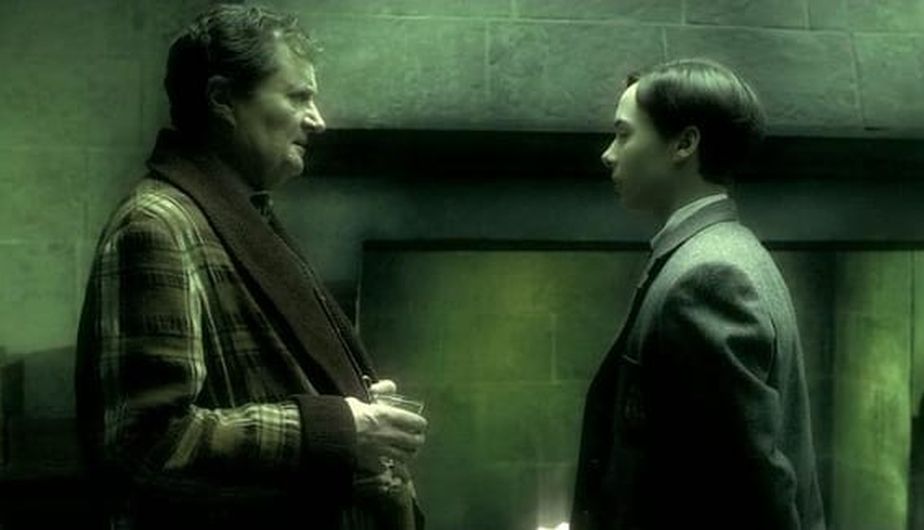
When it comes to the use of Dark Arts, Voldemort is arguably the more skilled and innovative of the two wizards. His most notorious feat was his unprecedented use of Horcruxes. By splitting his soul into seven parts and hiding them in various objects, he managed to achieve a form of immortality, something unheard of in the wizarding world. This demonstrated not only his deep knowledge of the Dark Arts but also his willingness to use them to their full potential, no matter the cost.
While Grindelwald did not delve into such extreme measures, he proved himself to be immensely powerful and resourceful in his own right. He was notably able to overcome Legilimency, a form of mind reading, which demonstrated a strong mental prowess. This ability allowed him to resist intrusions into his mind, something that requires considerable magical skill and mental strength. It’s important to note that while Legilimency itself is not a Dark Art, it can be used in ways that align with the principles of the Dark Arts.
2. Grindelwald Earned Long-term Loyalty, while Voldemort Instilled Immediate Fear


In terms of amassing followers and exercising influence, Grindelwald and Voldemort approached their leadership in drastically different ways, each effective in its own right. Grindelwald was able to earn long-term loyalty from his followers. His charisma, vision for a new wizarding order, and persuasive abilities won him a dedicated group of followers who stayed loyal to him even after his defeat.
Voldemort, on the other hand, chose a path of fear and intimidation. He instilled immediate and absolute terror, using ruthless tactics and the threat of deadly force to gain and maintain power. His followers, the Death Eaters, obeyed out of fear, aware of the fatal consequences of disobedience.
While Voldemort’s approach might have created a more immediate impact, the fear he instilled could be seen as a weakness, as it didn’t create true loyalty among his followers. A prime example of this is Severus Snape, one of Voldemort’s most trusted Death Eaters, who ultimately betrayed him due to his love for Lily Potter.
This defection proved detrimental to Voldemort and highlighted the inherent instability of a power structure built on fear rather than genuine loyalty. Snape’s betrayal also exposes a key limitation of Voldemort’s power: his inability to fully understand or predict the complex motives and emotions of his followers.
On the other hand, Grindelwald’s followers were loyal because they believed in him and his cause, making his influence arguably more powerful and long-lasting.
3. Voldemort Achieved Significant Control and Influence Over the Ministry of Magic
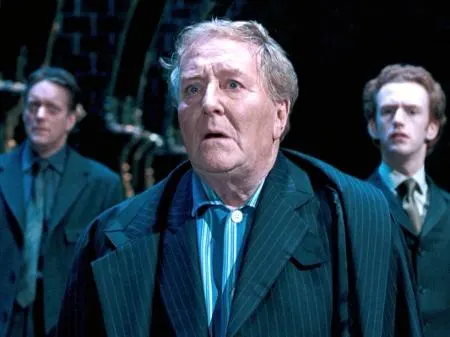
During his rise to power, Voldemort demonstrated a remarkable ability to infiltrate and manipulate key institutions within the wizarding world, most notably the Ministry of Magic. Through a combination of coercion, intimidation, and the strategic placement of his followers in positions of power, he effectively took control of the Ministry, using it to legitimize his reign and enforce his oppressive policies.
While Grindelwald was known to have significant influence in certain circles, there’s no record of him achieving the same level of control over a governmental body like the Ministry of Magic. This aspect of Voldemort’s power not only underscored his strategic acumen but also highlighted the far-reaching impact of his rule. Through the Ministry, he was able to extend his control, spreading fear and compliance throughout the wizarding community.
4. Grindelwald Successfully Wielded the Elder Wand, an Achievement Voldemort Could Not Match
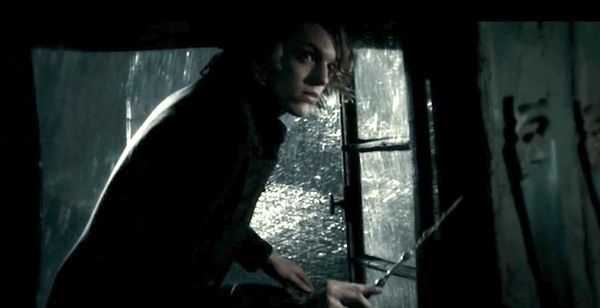
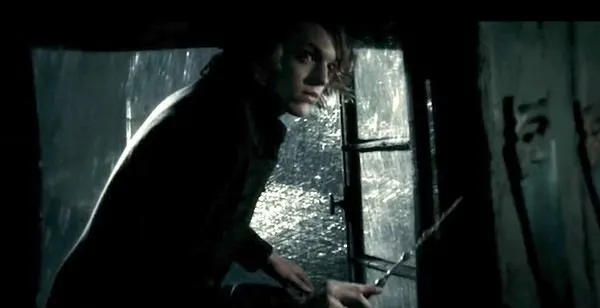
In the realm of powerful magical artifacts, the Elder Wand stands out as one of the most potent. As one of the fabled Deathly Hallows, its mastery is a testament to a wizard’s power. Grindelwald not only obtained the Elder Wand but also wielded it successfully for many years, enhancing his already formidable magical skills.
In stark contrast, Voldemort’s relationship with the Elder Wand was fraught with problems. Despite his efforts to command it, he never became its true master. His failure to understand the wand’s allegiance mechanism highlights a crucial gap in his magical knowledge and understanding.
Furthermore, it’s his lack of mastery over the Elder Wand that ultimately leads to his downfall in his final duel with Harry Potter. This inability to control one of the most powerful magical items in existence serves as a significant point of contrast between him and Grindelwald, and arguably, an indication of Grindelwald’s superior power in this regard.
5. Voldemort Held the Magical World in a State of Terror

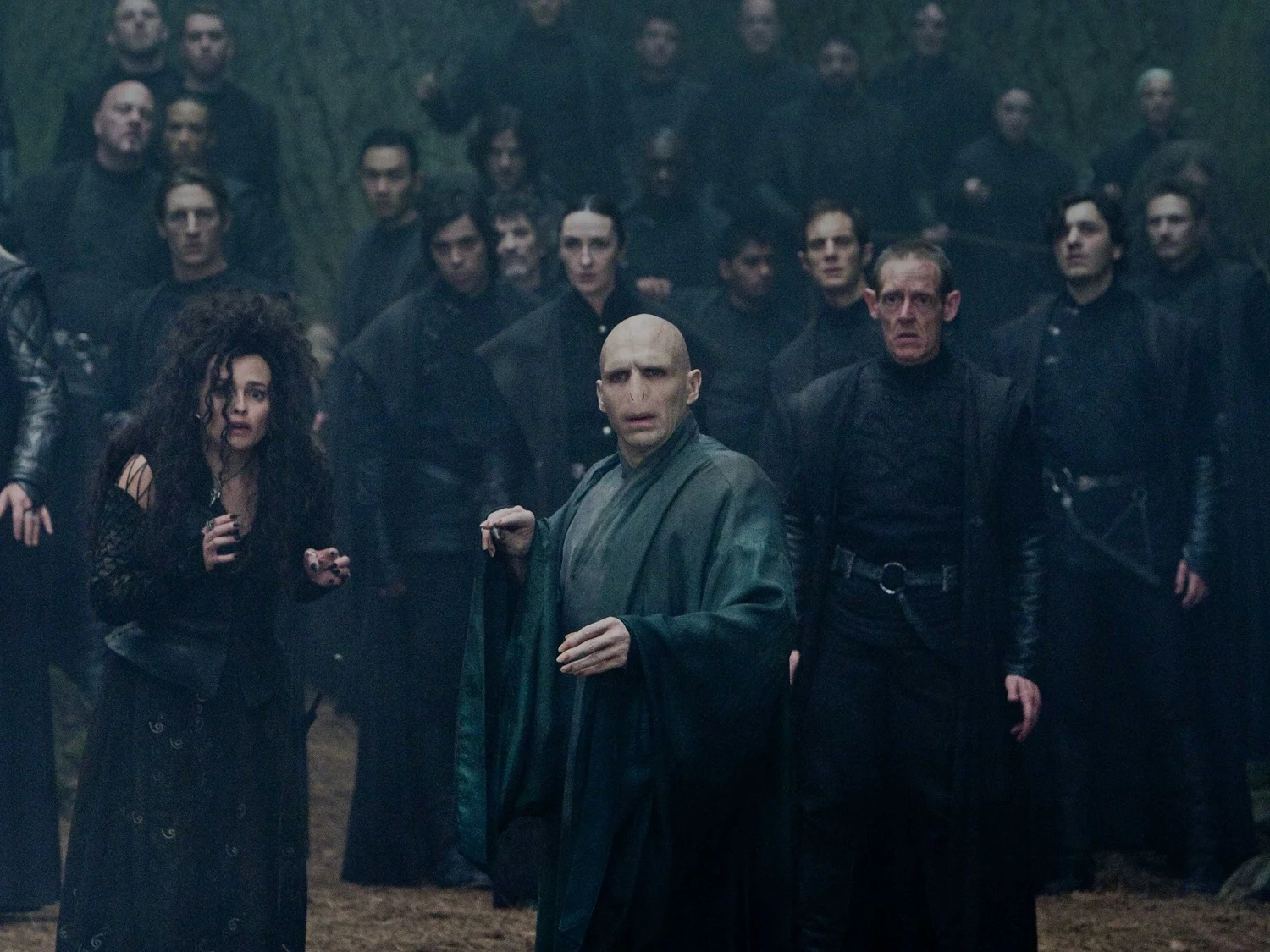
The reign of Lord Voldemort was undeniably characterized by a climate of fear and terror, demonstrating the immense power he held over the wizarding world. Under his leadership, the Death Eaters caused widespread chaos and destruction, instilling dread in witches and wizards everywhere. This widespread fear was a testament to his formidable power, as he was able to disrupt the peace and stability of the entire magical community.
While Grindelwald was also feared, the pervasive terror associated with Voldemort was unmatched, cementing his legacy as one of the most powerful dark wizards in history.
6. Grindelwald Reigned for a Longer More Successful Period

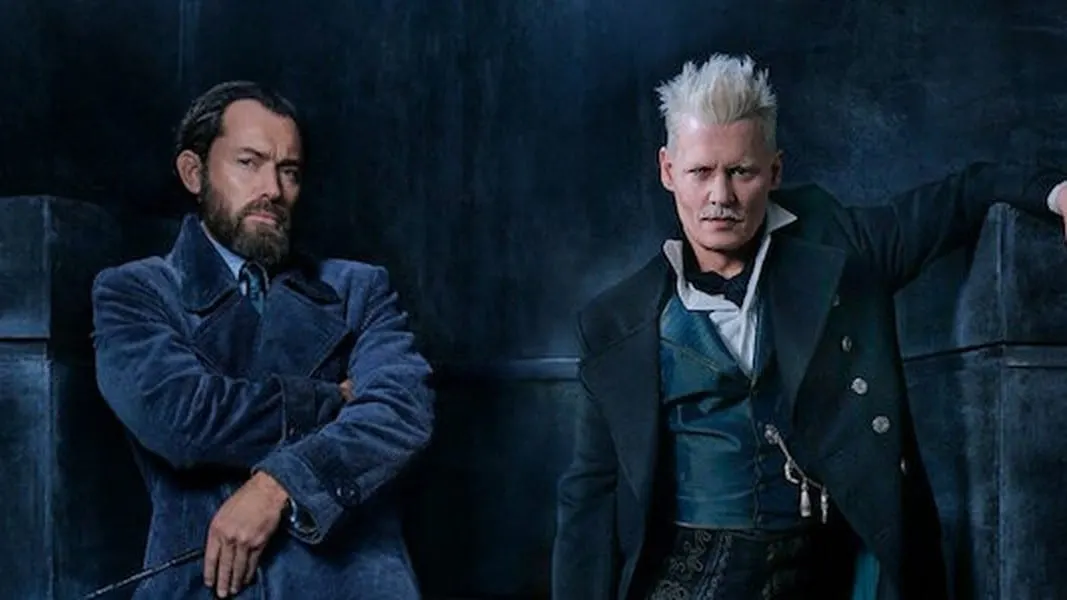
The scope and duration of Grindelwald’s reign showcase another dimension of his power. Grindelwald ruled for several decades, which is significantly longer compared to Voldemort’s intermittent periods of power. Throughout this extended reign, Grindelwald managed to amass and maintain a network of followers across the whole of Europe, demonstrating his charismatic leadership and strategic foresight.
His ability to inspire and manipulate a multitude of witches and wizards across various countries speaks volumes about his cunning and influence. While Voldemort did succeed in garnering a loyal group of followers in the Death Eaters, his influence was primarily confined to Britain.
Furthermore, Grindelwald’s reign was not characterized by constant upheaval and instability like Voldemort’s. Instead, he managed to maintain a more controlled and steady reign, which can be seen as a testament to his strategic acumen and leadership skills. Despite the atrocities he committed, Grindelwald’s more extended and stable period of rule could be considered a marker of his greater power in some respects.
7. Voldemort Orchestrated the Mass Breakout From Azkaban
Voldemort’s orchestration of the mass breakout from Azkaban is a notable demonstration of his immense power. Azkaban, the fortress-like prison for magical criminals, was known to be impregnable. Yet, Voldemort successfully masterminded a massive breakout that led to the release of many of his most loyal and dangerous followers.
This feat required not just immense magical power, but also strategic planning and manipulation. The fact that he was able to influence the Dementors, Azkaban’s fearsome guards, showcases his power to control dark creatures and his affinity with the darkest aspects of magic.
8. Grindelwald Showed a Degree of Mercy and Restraint in Combat

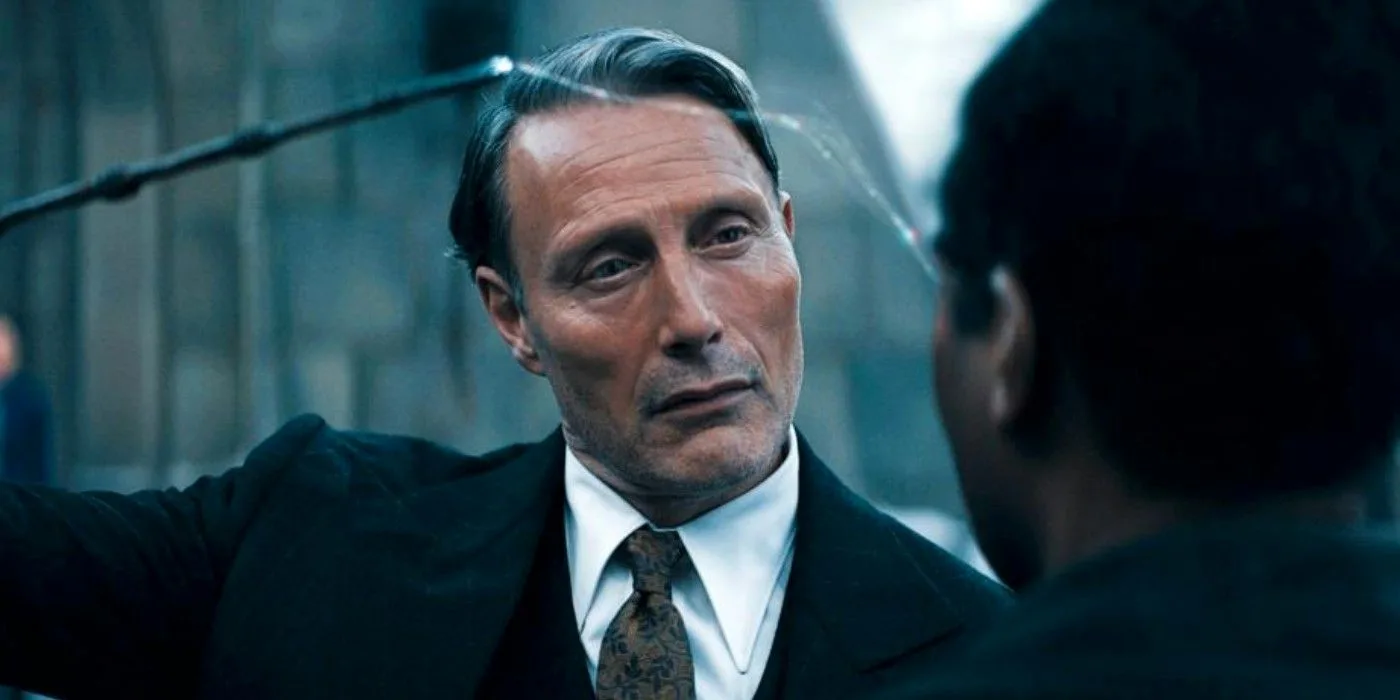
Grindelwald demonstrated a certain degree of mercy and restraint in combat that arguably speaks to his power as a wizard. Instead of using brute force or deadly spells at every turn, Grindelwald often opted for strategies that incapacitated his enemies rather than killed them. This not only reflects his skills as a duelist but also his control over his magical abilities, as it takes a certain level of mastery to use magic with precision rather than raw power.
In contrast, Voldemort’s approach to combat was marked by ruthlessness and a disregard for life. His readiness to use the Killing Curse is a testament to his power, but it also highlights his lack of restraint.
Furthermore, Grindelwald was an experienced duelist, having engaged in a legendary duel with Albus Dumbledore, considered by many to be the greatest wizard of his time. The fact that Grindelwald could hold his own against Dumbledore speaks volumes about his skill and power.
Why Did Grindelwald not Return to Kill Voldemort?
Gellert Grindelwald did not return to kill Voldemort for several reasons. Grindelwald was imprisoned in his own fortress, Nurmengard, after his defeat by Albus Dumbledore in 1945. This was before Voldemort came into power, and Grindelwald remained in Nurmengard for the rest of his life, effectively incapacitating him from making any move against Voldemort.
Secondly, by the time Voldemort rose to power, Grindelwald was an old man. His powers, though still formidable, were likely not what they once were.
Thirdly, when Voldemort visited Grindelwald in Nurmengard seeking information about the Elder Wand, Grindelwald lied to protect the location of the wand (which was then in Dumbledore’s possession), indicating that he had, in his own way, renounced his past and was not on Voldemort’s side. He did not disclose that the wand’s allegiance had shifted to Draco Malfoy, and then Harry Potter.
Finally, it’s worth noting that Grindelwald and Voldemort had different ideological views. Grindelwald wanted to establish a new order for the “greater good,” while Voldemort was more interested in personal power and immortality. This ideological difference might have made Grindelwald less inclined to directly challenge Voldemort.
Read more: Why Does Voldemort Not Have a Nose
Gellert Grindelwald: Examination of Power

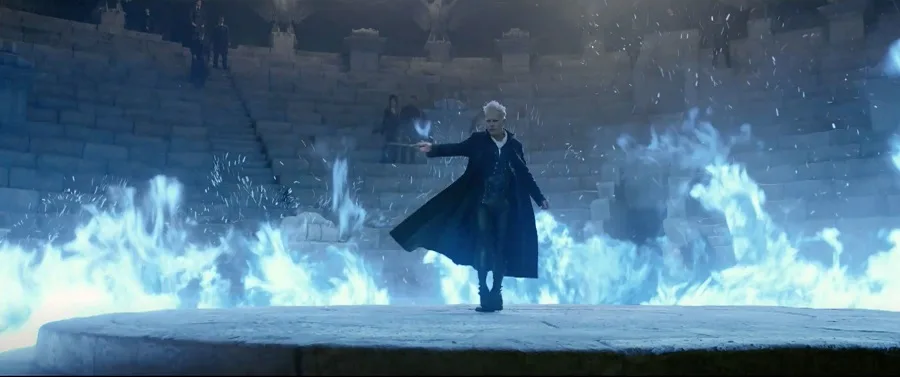
Gellert Grindelwald is widely recognized as one of the most powerful dark wizards of his time. His magical ability was unparalleled, only being outmatched by his contemporary and former friend, Albus Dumbledore. Grindelwald’s command over various complex spells, his proficiency in dueling, and his invention of the deadly Cruciatus Curse serve as a testament to his formidable magical prowess.
Intelligence is another key factor in Grindelwald’s power. His plan to unite the Deathly Hallows to make himself the Master of Death showcased his deep understanding of wizarding lore. His strategic ability was clear in his swift rise to power and the control he held over much of Europe during his reign.
However, Grindelwald’s charisma was perhaps his most dangerous trait. Unlike other dark wizards who relied heavily on fear to command, Grindelwald was able to inspire his followers with a vision of a world ruled by wizards for the greater good. This ideological stance attracted many to his cause, even though his methods were often ruthless and violent.
Lastly, Grindelwald’s influence should not be understated. He nearly succeeded in starting a global wizarding war, and his actions left an indelible mark on the wizarding world. His efforts to overturn the Statute of Secrecy led to serious tensions between the magical and non-magical communities, a conflict that resonates even years after his downfall. His power and legacy are such that his name is still spoken with fear and reverence long after his defeat.
Lord Voldemort: Examination of Power
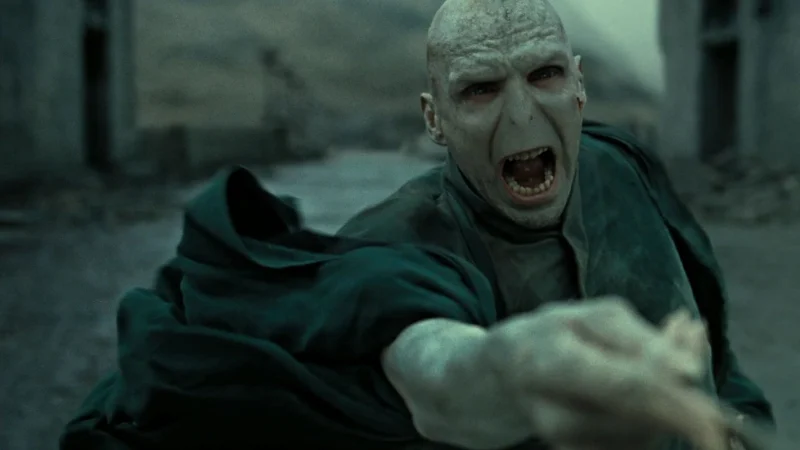
Lord Voldemort, born Tom Marvolo Riddle, is undeniably one of the most formidable dark wizards in the history of the wizarding world. His magical prowess was evident from a young age. A prodigy at Hogwarts, Voldemort demonstrated exceptional skill in various fields of magic, and later honed his abilities to deadly perfection.
Voldemort’s understanding of Dark magic was deep and extensive. His creation of multiple Horcruxes, a feat that few wizards could even comprehend, showcased his willingness to push the boundaries of magic to serve his ends. His ability to command dangerous creatures like the Basilisk and his pioneering use of Inferi further demonstrate his mastery over dark magical disciplines.
Voldemort’s cunning and ambition were central to his rise to power. He managed to keep his true identity secret from most, maintaining the facade of the charming Tom Riddle while he plotted in the shadows. His manipulation of people, as seen in his orchestration of the opening of the Chamber of Secrets, testifies to his strategic acumen.
Voldemort’s influence was vast and terror-inducing. His followers, the Death Eaters, were motivated as much by fear as by loyalty. Under his reign, the wizarding world lived in dread, and his name was so feared that most dared not speak it. Even after his death, the fear and horror associated with Voldemort remain, a chilling testament to his dark reign and enormous power.